
Running time: 8 mins 27 secs
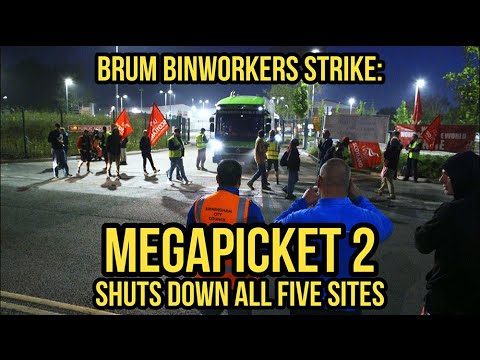
Striking Birmingham binworkers received a massive boost on July 25 when Megapicket 2, supported by 29 trade unions and organisations, mobilised hundreds to shut down every site in both Birmingham and Coventry.
The mass picket was even more impressive given that agency workers started turning up two hours early for work at 4am, in a clear attempt by the bosses to get the wagons out before pickets arrived – but it ended in failure, as pickets started arriving from 3:30am in anticipation of something like this happening.
The binworkers – who are unable to effectively picket their own workplaces due to Birmingham City Council obtaining an injunction preventing them – are facing life-changing pay cuts of up to £8,000 a year for loaders and up to £11,000 a year for drivers, by a council who are trying to forcing them to pay for the disastrous mistakes they’ve made in running the city.
The council are claiming this is an equal pay issue, with bin workers earning more than dinner ladies – but as Jeremy Corbyn points out at one of the pickets, equal pay legislation was never supposed to cut peoples’ wages to make things equal; it was supposed to increase them.
Meanwhile, council leader John Cotton rakes in £260,000 a year (more than the Prime Minister), has spent an eye watering £9 million on the scabbing operation to try and break the strike, and has overseen the council being handed over to commissioners to run because the government doesn’t even trust him to do that properly.
Megapicket 2 showed the council – and the government – that this dispute is not going away, and is only going to get bigger. But the real significance of Megapicket 2 is that one of our most powerful weapons as workers, mass secondary picketing, is back. The more we use it – especially if we combine it with returning to unofficial strikes – the more we have a chance to seriously sort out the mess that successive governments have left this country in.


